| HS Code | 717527 |
| Density | 0.910 - 0.965 g/cm³ |
| Melting Point | 105 - 135 °C |
| Tensile Strength | 8 - 31 MPa |
| Elongation At Break | 100 - 700% |
| Flexural Modulus | 200 - 1,300 MPa |
| Impact Strength Izod Notched | 21 - 214 J/m |
| Hardness Shore D | 40 - 70 |
| Water Absorption 24h | < 0.01% |
| Chemical Resistance | Resistant to dilute acids, alkalis, and most organic solvents at room temperature |
| Electrical Insulation | Excellent dielectric strength and volume resistivity |
| Thermal Conductivity | 0.33 - 0.55 W/m·K |
| Uv Resistance | Poor unless UV-stabilized |
| Transparency | Translucent to opaque, depending on density and grade |
| Continuous Service Temperature | -50 to 80 °C |
As an accredited Polyethylene Resin PE factory, we enforce strict quality protocols—every batch undergoes rigorous testing to ensure consistent efficacy and safety standards.
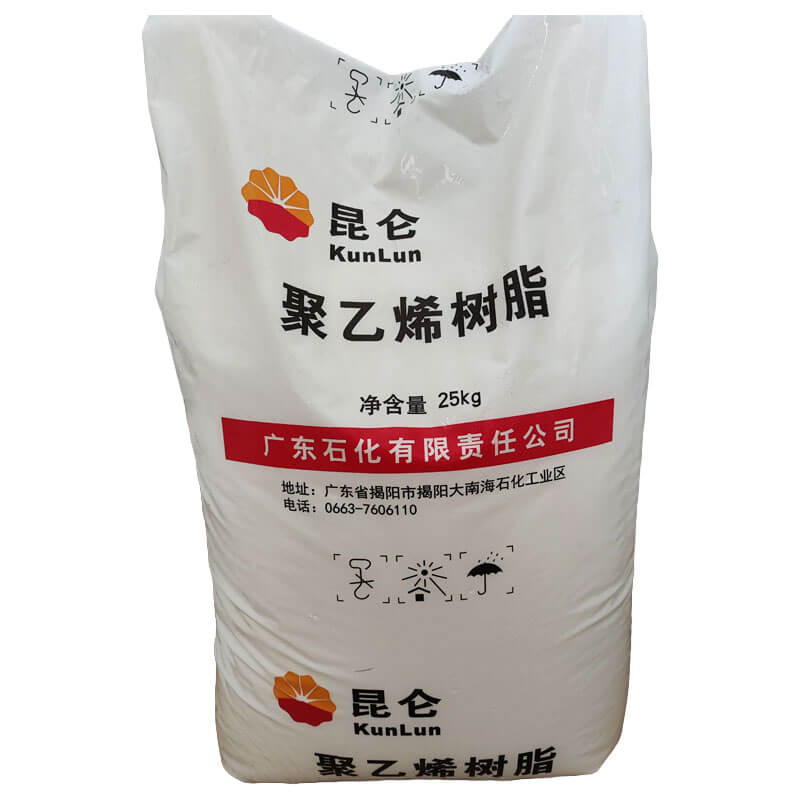
| Packing | Polyethylene Resin PE is supplied in 25 kg multilayer paper bags, palletized and shrink-wrapped for safe transport and storage. |
| Container Loading (20′ FCL) | 20′ FCL: Polyethylene Resin PE packed in 25kg bags on pallets, securely loaded and containerized for safe transport. |
| Shipping | Polyethylene Resin (PE) is shipped as non-hazardous plastic raw material in virgin pellet or powder form. It is typically packed in woven polypropylene bags, FIBC bulk bags, or lined containers, then transported by sea, rail, or truck. Keep dry, avoid excessive heat, and protect from contamination during transit. |
| Storage | Store Polyethylene Resin PE in a cool, dry, well-ventilated area away from direct sunlight, heat sources, and open flames. Keep packaging sealed to prevent moisture absorption and contamination. Stack bags on pallets, avoiding excessive height to prevent collapse. Maintain good housekeeping to minimize dust accumulation. No special incompatible materials nearby; standard firefighting precautions apply. |
| Shelf Life | Polyethylene (PE) resin has an indefinite shelf life when stored in a cool, dry, shaded area, protected from UV and contamination. |
Food-contact polyethylene film production is governed by end-product simulant exposure rather than resin composition alone. EU Regulation No 10/2011 sets an overall migration limit of 10 mg/dm² for plastic materials intended to contact food, and FDA 21 CFR 177.1520 establishes the permitted olefin polymer envelope in the United States. Converters are also expected to operate under good manufacturing practice defined in EC 2023/2006. Because packaging film failures are usually traced to additive migration rather than base resin dissolution, additives are selected from organoleptically inert phenolic and siloxane chemistries. Amine-based processing aids are incompatible with acid-functional cling modifiers and are excluded from this application to avoid premature colour shift during film ageing.
The polyethylene fraction in a three-layer A/B/A film typically constitutes 90–98 wt% of the finished structure. LDPE with melt index 0.3–2.0 g/10 min is added at 10–30 wt% to LLDPE to stabilise the bubble. Functional additive loading ranges are provided below.
| Functional additive | Typical loading range | Measured film property | Test method |
|---|---|---|---|
| Erucamide slip agent | 500–1,500 ppm | Kinetic coefficient of friction | ASTM D1894 |
| Synthetic silica antiblock | 1,000–5,000 ppm | Haze and blocking force | ASTM D1003, ASTM D3354 |
| Primary phenolic antioxidant | 0.05–0.15 wt% | Oxidative induction time | ASTM D3895 |
Blown film lines use annular dies with die gap 1.2–2.0 mm, blow-up ratio 2.0:1–3.0:1, and melt temperature 180–220°C. High-output lines with internal bubble cooling maintain frost line height within ±50 mm of the set point; excursions above 220°C at the die lip accelerate slip agent bloom to the film surface and produce haze variation across the width. On multi-layer equipment, the outer layers are formulated for seal initiation temperature of 90–110°C while the core layer carries both strength and downgauging. Dart impact is measured on finished film per ASTM D1709, tear propagation per ASTM D1922, and seal strength per ASTM F88/F88M.
Finished film is converted into frozen food bags, bakery wraps, produce rack bags, and liquid-contact pouch laminates. The material is not qualified for retort or high-acid hot-fill unless a barrier layer and specific migration testing under EN 1186-1:2002 are added to the structure.
Potable water and gas distribution pipes made from HDPE are qualified against ISO 4427-2:2019, EN 12201-2:2011+A1:2013, and ISO 4437:2014. Material classification is performed under ISO 9080:2012 and ISO 12162:2009; a PE100 designation indicates a minimum required strength of 10 MPa at 50 years and 20°C extrapolated from multi-temperature rupture testing, while PE80 is limited to 8 MPa under the same convention. Potable water approval is maintained under national schemes such as NSF/ANSI 61 or drinking-water product standards. Black pipe compounds are specified with carbon black content of 2.0–2.5 wt% to prevent photo-oxidative chain scission during open-yard storage.
The final pipe wall contains HDPE at 97.0–97.5 wt% and carbon black at 2.0–2.5 wt%, with a primary/secondary antioxidant package at 0.2–0.5 wt%. The base resin is a high-viscosity bimodal copolymer with typical MFR at 190°C/5 kg of 0.20–0.50 g/10 min and density 0.950–0.960 g/cm³. Calcium carbonate is not added to pressure-class pipe; any level above 0.1 wt% indicates off-spec regrind contamination and fails the cell class requirements of ASTM D3350-21. Carbon black dispersion is assessed by ISO 18553:2002 because agglomerates larger than 50 µm have been associated with brittle crack initiation in hydrostatic batch failures.
Extrusion of large-diameter pressure pipe uses a grooved-feed single-screw extruder with screw L/D 30:1–36:1, screen pack of 80–120 mesh, and a spiral mandrel die. Melt temperature at the adapter is controlled to 200–230°C; operation above 240°C produces gel particles and shatter cracks. Vacuum calibration is held at −0.2 to −0.8 bar to set outer diameter, while cooling tank temperature is staged from 40°C to 15°C to control residual stress. For pipe diameters above 250 mm, line speed is typically below 1.0 m/min because wall sag in the cooling zone reduces wall thickness at the 12 o’clock position and creates undersized sections.
Batch release and qualification hydrostatic testing is performed under ISO 1167-1:2006; test stress and duration depend on pipe SDR and service temperature. Published data for high-temperature sustained-pressure performance of PE100 in chlorinated potable water is limited and requires site-specific validation. Terminal products include potable water mains, pressure sewer force mains, gas distribution lines, and industrial slurry pipes. The same resin base is used for electrofusion fittings, where dimensional tolerances of ±0.15 mm on the fusion zone prevent overheating and melt-flow disruption during joint assembly.
In rotational moulding of linear-low-density polyethylene, process control is shifted from melt pressure to sintering time at the mould wall. Chemical storage tanks fabricated from LLDPE are ordered against ASTM D1998-21; potable-water variants are additionally evaluated under NSF/ANSI 61 or national approval schemes. The resin is a rotomoulding powder with 35-mesh top size, dry flow measured per ASTM D1895, and melt index typically 3–6 g/10 min at 190°C/2.16 kg. Density is specified at 0.926–0.940 g/cm³ to balance stiffness and impact resistance.
The dry-blend formulation is 100 parts LLDPE powder, UV stabilizer package 0.2–0.5 phr, antioxidant 0.05–0.15 phr, and colour or carbon black masterbatch 1–3 phr. Calcium carbonate is limited to 5 phr in chemical tank formulations because higher filler loadings reduce environmental stress crack resistance and can create pinhole channels at metal insert bosses.
Rotational moulding equipment rotates the closed mould biaxially at a primary-to-secondary speed ratio of 4:1. Oven air temperature is set between 280°C and 320°C, while internal air temperature reaches 200–230°C; the mould surface is held at 190–220°C for a dwell period determined by nominal wall thickness. Cooling starts with forced air and then water mist; rapid cooling below 90°C reduces warpage but also reduces crystallite size and can lower creep resistance. On production-scale machines, an under-cured inner surface caused by a soak time reduction of 10–15% produces a chalky inner layer and stress cracks around spin-welded bosses.
Terminal products include vertical cylindrical chemical storage tanks from 200 L to 50,000 L, double-wall secondary containment units, and rectangular agricultural spray tanks. Fitting bosses are spin-welded to the tank wall; welds are inspected by root bead fusion and, in lined chemical service, spark-tested at 10–30 kV to locate pinhole defects.
High-flow HDPE injection moulding for logistic containers and beverage crates is characterized by rapid crystallisation and non-isotropic shrinkage. Material is specified under ASTM D4976-21, tensile properties under ASTM D638-14 and ISO 527-2, impact resistance under ISO 179-1, and food-contact grades under FDA 21 CFR 177.1520. A homopolymer or ethylene-butene copolymer with melt index 8–30 g/10 min is selected for thin-wall filling; mould shrinkage measured to ASTM D955-14 is typically 1.5–2.5%.
Commercial crate compounds contain 5–12 wt% calcium carbonate concentrate and 0.05–0.2 wt% nucleating agent to shorten cycle time, but filler loading above 12 wt% sharply reduces notched Izod impact and increases hinge breakage in bottle crates. Colour masterbatch is let down at 2–4 wt%; ultraviolet stabilizer at 0.1–0.4 wt% is added for outdoor pallet service. Recycled HDPE may be incorporated up to 20 wt% only where melt flow and impact requirements remain within specification.
Injection moulding is performed with clamp force calculated at 3–5 tonnes per square inch of projected area, melt temperature 210–260°C, and mould temperature 15–40°C. Filling speed is set to prevent jetting; a holding pressure of 60–80% of injection pressure is applied until gate freeze. Differential shrinkage in thick ribs and gate regions causes warpage, so the gate is located near the centre of mass and the part is removed at a uniform ejection temperature. Production-scale failures typically appear as stress whitening at the rear wall and insufficient boss pull-out resistance measured by ASTM D6110 or proprietary break-load fixtures.
Terminal parts include stackable bottle crates, foldable logistic sleeves, agricultural harvest bins, and hygienic food transfer crates. Parts are designed for repeated steam cleaning at 80–90°C; top-load creep is evaluated at 45°C for 72 h to simulate warehouse stacking.
For blow-moulded HDPE containers intended for dangerous goods shipment, the pinch-off weld is the load-bearing point that governs side-impact performance under UN Model Regulations, Chapter 6.1 and the 49 CFR 178 packaging provisions. Pharmacopoeial plastics testing is performed under USP <661.1>, and food or personal care containers fall under FDA 21 CFR 177.1520 or EU No 10/2011. The selected grade is a blow-moulding HDPE with melt index 0.2–0.8 g/10 min and density 0.950–0.960 g/cm³. Formulation is 100 parts HDPE resin, white or coloured masterbatch 2–5 phr, antistatic concentrate 0.05–0.2 phr, and outdoor UV package 0.1–0.5 phr for jerry cans stored in yard conditions. No inorganic filler is used in UN-rated containers because filler lowers environmental stress crack resistance and reduces drop-test survival at −18°C.
Extrusion blow moulding uses an accumulator head or continuous shuttle, melt temperature 180–230°C, and mould cooling temperature 10–30°C. Parison sag is controlled by resin melt strength; HDPE die swell ranges from 10–30% depending on shear rate and die land length. The pinch-off weld is formed at the flash line under low melt temperature; insufficient clamp pressure leaves a weak knit line that fails the UN drop test after conditioning at −18°C for 24 h. Finished types include 500 mL to 25 L industrial packaging, UN-certified jerry cans, agrochemical bottles, and thick-walled containers for cleaning chemicals. Barrier containers are produced as multilayer HDPE/EVOH structures, typically with HDPE at 85–90 wt% of the wall and tie resin at 2–4 wt%.
Extrusion coating of LDPE onto paperboard and aluminium foil for aseptic packaging demands a resin with high melt index and low neck-in. The coating grade is specified under ASTM D4976-21, and food-contact compliance is demonstrated under FDA 21 CFR 177.1520 and EU No 10/2011. Melt index is typically 4–15 g/10 min at 190°C/2.16 kg, and density is 0.915–0.922 g/cm³.
The resin is used near-neat: primary antioxidant 0.05–0.1 wt%, and for foil adhesion a maleic anhydride-modified PE concentrate may be added at 1–3 wt% only where peel strength specification requires it. Calcium carbonate and titanium dioxide are avoided in high-draw coating grades because they reduce melt strength and create die lip deposits.
Extrusion coating is run with a T-slot die, die-to-nip air gap 150–250 mm, and melt temperature 290–320°C at the die exit. The hot melt is drawn down to coat weights of 10–40 g/m² and laminated at a cooling roll temperature of 15–25°C. Oxidation in the air gap is deliberately induced to improve adhesion to paperboard, but excessive air gap or melt temperature above 330°C creates off-odor and reduces heat seal tightness. Corona treatment of the LDPE surface is set to 38–44 mN/m to prepare for downstream printing or lamination.
Finished structures include gable-top carton base stock, paper cups, industrial salt and detergent pouches, and foil-based sachet laminates. Adhesion is tested by peel per ASTM F88/F88M or internal T-peel methods after sealing at 120–160°C.
HDPE geomembrane liner production operates under a different quality model from packaging: the product is judged by durability under chemical attack and landfill leachate, not by migration. The material specification is GRI-GM13, with resin density tested by ASTM D1505, sheet thickness by ASTM D5199, tensile properties by ASTM D6693, and tear resistance by ASTM D1004. Carbon black is added at 2.0–3.0 wt% against ASTM D4218, and carbon black dispersion is assessed by ISO 18553:2002 to prevent large agglomerates that initiate stress cracks.
The compound is formulated with HDPE resin at 96–98 wt%, carbon black at 2.0–3.0 wt%, and an antioxidant/UV stabilizer package at 0.25–0.75 wt%. No calcium carbonate filler is permitted in GRI-GM13-grade sheet because filler particles act as stress concentration points and reduce the notched constant tensile load test time under ASTM D5397.
Sheet extrusion or flat-die calendering produces rolls with width 5–10 m and nominal thickness 1.0–2.5 mm. Melt temperature at the die is kept between 200°C and 240°C; thickness variation within ±10% is maintained by automatic die bolt adjustment and gamma backscatter gauging. Textured surfaces, where required, are formed by embossing the hot web or spraying the same polyethylene onto the cooled sheet. Factory seams are made by wedge welding or hot air welding at 180–220°C, and destructive seam peel is performed on every production seam.
Finished products are deployed as primary liners for municipal solid waste landfills, secondary containment for chemical storage terminals, heap leach pads in metal extraction, and floating covers for wastewater lagoons. The material is not used for potable-water membrane service without separate certification because antioxidant packages are chosen for long-duration oxidative induction time rather than drinking-water taste-and-odor requirements.
Competitive Polyethylene Resin PE prices that fit your budget—flexible terms and customized quotes for every order.
For samples, pricing, or more information, please contact us at +8618018036652 or mail to sales6@ascent-chem.com.
We will respond to you as soon as possible.
Tel: +8618018036652
Email: sales6@ascent-chem.com
Flexible payment, competitive price, premium service - Inquire now!
Polyethylene Resin PE is supplied as pelletized semicrystalline thermoplastic resin in low-density polyethylene (LDPE), linear low-density polyethylene (LLDPE), medium-density polyethylene (MDPE), and high-density polyethylene (HDPE) families. Classification under ISO 17855-1 separates these families by density: LDPE from 0.917 g/cm³ to 0.925 g/cm³, LLDPE from 0.916 g/cm³ to 0.940 g/cm³, MDPE from 0.926 g/cm³ to 0.940 g/cm³, and HDPE from 0.941 g/cm³ to 0.967 g/cm³. Melt flow rate measured by ISO 1133-1:2022 at 190 °C/2.16 kg ranges from below 0.1 g/10 min in high-molecular-weight film grades to above 20 g/10 min in injection-moulding grades. The product differs from polypropylene in lower melting temperature and tensile modulus, from polyester in substantially higher oxygen permeability, and from polyvinyl chloride in halogen-free combustion behaviour. Commercial specification sheets normally list density, melt flow rate, comonomer content, additive package, and the applicable cell classification under ASTM D4976-12a(2020).
Selection begins with the conversion process rather than the end-use property alone. For injection moulding of HDPE thin-wall packaging, melt flow rates of 5 g/10 min to 20 g/10 min at 190 °C/2.16 kg are common, and hydraulic clamp force is typically specified between 2.0 kN/cm² and 4.0 kN/cm² of projected area. Blow moulding grades require lower melt flow rates, usually 0.3 g/10 min to 0.7 g/10 min, to maintain parison hang strength. For blown film LLDPE, melt flow rates from 0.5 g/10 min to 2.0 g/10 min are typical. Extrusion coating LDPE grades are often specified at 4 g/10 min to 7 g/10 min. Rotational moulding MDPE resins are supplied as powder with dry flow values from 30 s/100 g to 45 s/100 g and bulk density from 0.47 g/cm³ to 0.56 g/cm³.
| Property | Test method | LDPE | LLDPE | HDPE |
|---|---|---|---|---|
| Density | ISO 1183-1:2019 / ASTM D1505-18 | 0.917–0.925 g/cm³ | 0.916–0.940 g/cm³ | 0.941–0.967 g/cm³ |
| Melt flow rate, 190 °C/2.16 kg | ISO 1133-1:2022 | 0.2–70 g/10 min | 0.5–20 g/10 min | 0.03–30 g/10 min |
| Tensile yield strength | ISO 527-2 / ASTM D638-14 | 8–12 MPa | 12–20 MPa | 22–31 MPa |
| Flexural modulus | ISO 178:2019 | 150–300 MPa | 200–500 MPa | 900–1500 MPa |
| Vicat softening temperature, A50 | ISO 306:2022 | 85–95 °C | 90–105 °C | 120–130 °C |
| Tensile elongation at break | ISO 527-2 | 300–600% | 600–900% | 200–1000% |
The ranges in Table 1 are not specification limits; they represent typical commercial windows. Individual grades may fall outside these values depending on molecular weight distribution, comonomer type, and additive loading. Polyethylene does not require pre-drying under normal 50% RH storage because equilibrium moisture absorption is below 0.01%. However, condensation on silo walls at relative humidity above 80% must be prevented before feeding to single-screw extruders with L/D 24:1 to 30:1. Barrel temperature profiles of 160 °C to 200 °C for LDPE, 190 °C to 240 °C for LLDPE, and 180 °C to 230 °C for HDPE are typical on commercial machines. Residence time above 240 °C should be limited because chain scission and crosslinking produce gel specks and increase film haze when tested by ASTM D1003-21. Processing aids such as fluoroelastomer masterbatch are added at 200 mg/kg to 1000 mg/kg to suppress sharkskin in narrow-molecular-weight LLDPE.
In blown film extrusion of linear low-density PE, die gap and frost line height control tear properties, haze, and dart impact. Typical die gaps are 1.5 mm to 2.3 mm, blow-up ratios are 2.0:1 to 3.0:1, and frost-line heights are 3 to 8 die diameters. On commercial lines with 50 mm to 90 mm single-screw extruders and L/D 25:1 to 30:1, LLDPE bubble stability is maintained by internal bubble cooling and dual-lip air rings. The onset of sharkskin melt fracture in narrow-molecular-weight LLDPE is observed at wall shear stress in the range of 0.14 MPa to 0.20 MPa; wider die gaps or polymer processing aids shift the critical shear rate upward. Gauge variation across the bubble is typically held to ±5% at 25 µm to 50 µm film thickness using gravimetric feed control and automatic profile dies. Dart impact strength measured by ASTM D1709-16a and tear strength measured by ASTM D1922-23 are used to set blow-up ratio and frost-line height.
The oxygen barrier of polyethylene is quantitatively inferior to polyester. Oxygen transmission rate for 50 µm LDPE film measured by ASTM D3985-17 at 23 °C and 0% RH is typically 1500 cm³/m²·day·atm to 3000 cm³/m²·day·atm, while PET of comparable thickness is below 40 cm³/m²·day·atm. Water vapour transmission rate measured by ASTM F1249-20 at 38 °C and 90% RH is 4 g/m²·day to 8 g/m²·day for LDPE, which is lower than PET but higher than PP. Polypropylene has a melting temperature of 160 °C to 170 °C, allowing hot-fill and microwave application; HDPE Vicat softening is 120 °C to 130 °C. Polyvinyl chloride has higher density and tensile modulus but requires heat stabilizers and plasticizers to process, whereas PE is processed without primary heat stabilizer under normal conditions because dehydrochlorination does not occur.
In chemical resistance, HDPE is preferred for detergent bottles because environmental stress crack resistance measured by ASTM D1693-21 Condition A is typically above 100 h for bimodal grades, although published data for specific formulations vary. Polypropylene exhibits lower density and higher flexural modulus but can be more prone to brittle failure at sub-zero temperatures; LLDPE retains flexibility below −40 °C when tested by ASTM D746-20. Electrical-grade LDPE compound may exhibit dielectric constant of 2.2 to 2.4 and dissipation factor below 0.0005 at 50 Hz when tested by IEC 60250.
A shift from polypropylene to high-density PE in thin-wall injection moulding is justified only when lower processing temperature and lower melt viscosity outweigh the reduction in flexural modulus. HDPE grades with melt flow rates of 12 g/10 min to 20 g/10 min fill thin-wall moulds at melt temperatures of 200 °C to 230 °C and mould temperatures of 10 °C to 40 °C. Linear mould shrinkage measured by ASTM D955-21 is 1.5% to 3.0% for HDPE, compared with 1.0% to 2.5% for PP. Warpage is lower when mould cooling is uniform because PE crystallization is slower and less orientation-dependent than PP in thin sections. However, the continuous service temperature of HDPE is approximately 80 °C; hot-fill above this boundary requires PP or PET. Published comparative data for exact injection pressure reduction are limited; lower melt viscosity at equivalent melt flow rate reduces energy input but not necessarily cycle time.
For rotational moulding of medium-density PE, pulverized resin with dry flow from 30 s/100 g to 45 s/100 g and bulk density from 0.47 g/cm³ to 0.56 g/cm³ is specified. Peak internal air temperature of 200 °C to 220 °C is maintained; undercure below 190 °C produces porosity and a measurable loss in impact strength by ISO 6603-2. Cooling rate determines warpage and shrinkage, with slow cooling reducing residual stress but extending cycle time. Polyethylene powder absorbs minimal water, so pre-drying is not required unless the powder has been stored in conditions that allow surface condensation.
| Standard or regulation | Scope | Data required for PE |
|---|---|---|
| FDA 21 CFR 177.1520(c) | Olefin polymers for food contact | Density, melting point, extractables in food simulants |
| EU Regulation (EU) No 10/2011, Annex I and II | Plastics for food contact | Overall migration and specific migration limits |
| REACH Regulation (EC) No 1907/2006 | Registration of monomers and additives | CAS 9002-88-4 and additive substances |
| RoHS Directive 2011/65/EU | Hazardous substances in electrical and electronic equipment | Pb, Hg, Cd, Cr(VI), PBB, PBDE below maximum concentration values |
| ASTM D4976-12a(2020) | Specification for polyethylene plastics | Cell classification by density, melt flow rate, and property tests |
Polyethylene without UV stabilizer is not suitable for prolonged outdoor exposure; carbon black masterbatch at 2.0 wt% to 2.5 wt% or hindered amine stabilizer systems are required. Contact with strong oxidizing acids and long-term exposure to aromatic hydrocarbons cause softening or stress cracking. Combination with certain amine-based additives may scavenge free radicals and reduce oxidative stability; compatibility should be confirmed by differential scanning calorimetry oxidative induction time per ASTM D3895-19.